
Is Mild Retrolisthesis a Disability? Here’s What You Need to Know
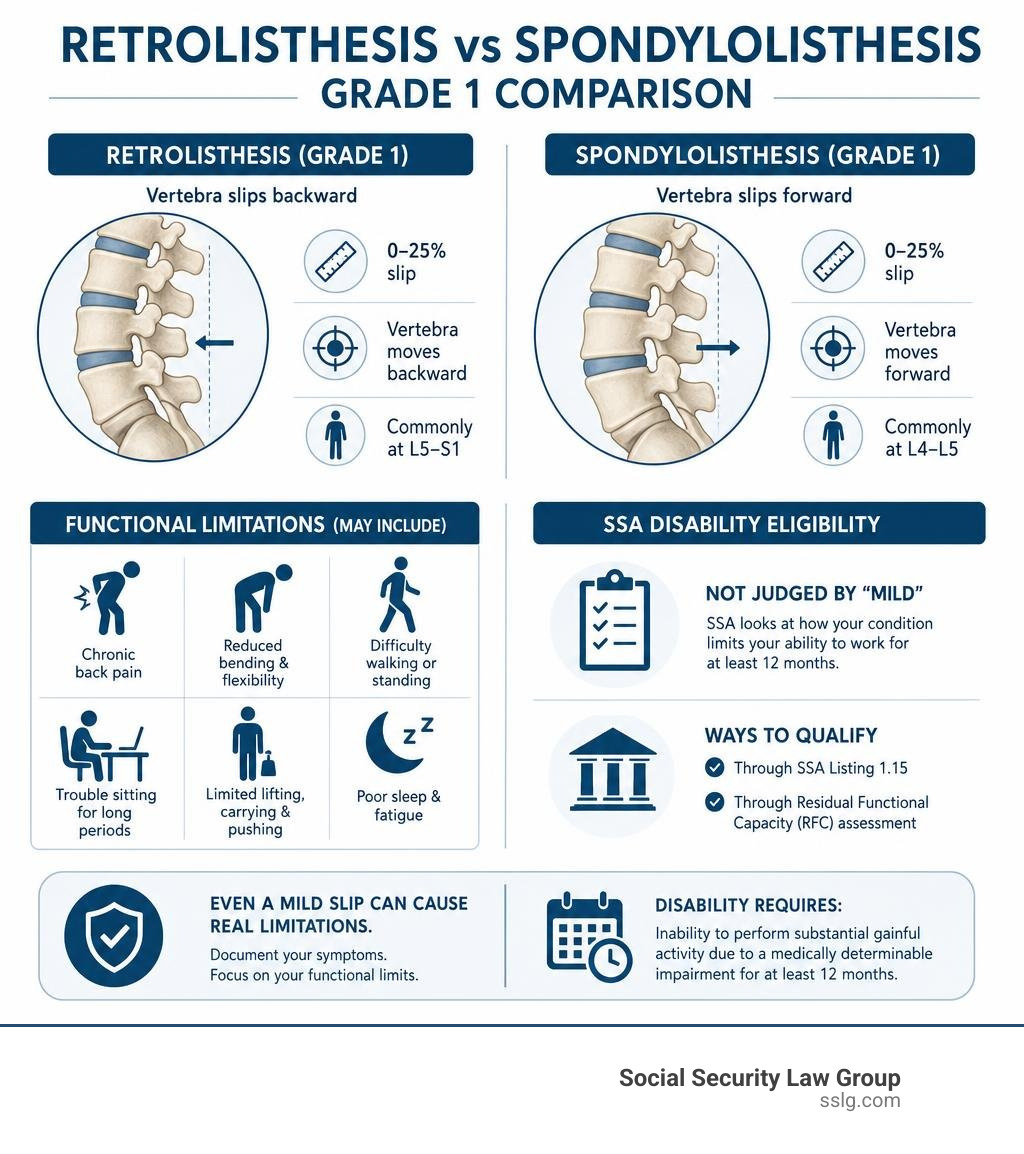
Is mild retrolisthesis a disability under Social Security rules? The short answer is: yes, it can be. Here is a quick summary before we dive deeper:
Quick Answer:
- Mild (Grade 1) retrolisthesis can qualify as a disability if it prevents you from working for at least 12 months
- The SSA does not judge your condition by the word “mild”; instead, it judges by how much your symptoms limit what you can do
- You may qualify through SSA Listing 1.15 or through a Residual Functional Capacity (RFC) assessment
- Both SSDI and SSI programs are available depending on your work history and financial situation
- In 2026, SSDI averages around $1,630 per month, with a maximum of roughly $4,152 per month
Many people are told their retrolisthesis is “just mild” and assume they cannot qualify for benefits. That is not how the SSA sees it. Even a backward vertebral slip of just 2 millimeters can disrupt spinal alignment, compress nerves, and cause chronic pain that makes it impossible to hold down a full-time job.
Retrolisthesis affects roughly 23.2% of people at the L5-S1 spinal level, according to clinical research. Yet many claimants are denied benefits simply because they did not know how to document their functional limitations.
At Social Security Law Group, we have helped clients across California, Oregon, Washington, Texas, Florida, and Massachusetts navigate exactly this kind of situation since 1994. This guide explains everything you need to know.
The information in this article is general in nature and does not constitute legal advice. Social Security laws and regulations are subject to change. Please consult the SSA website or contact Social Security Law Group for guidance specific to your situation.
What Is Grade 1 Retrolisthesis and How Is It Defined?
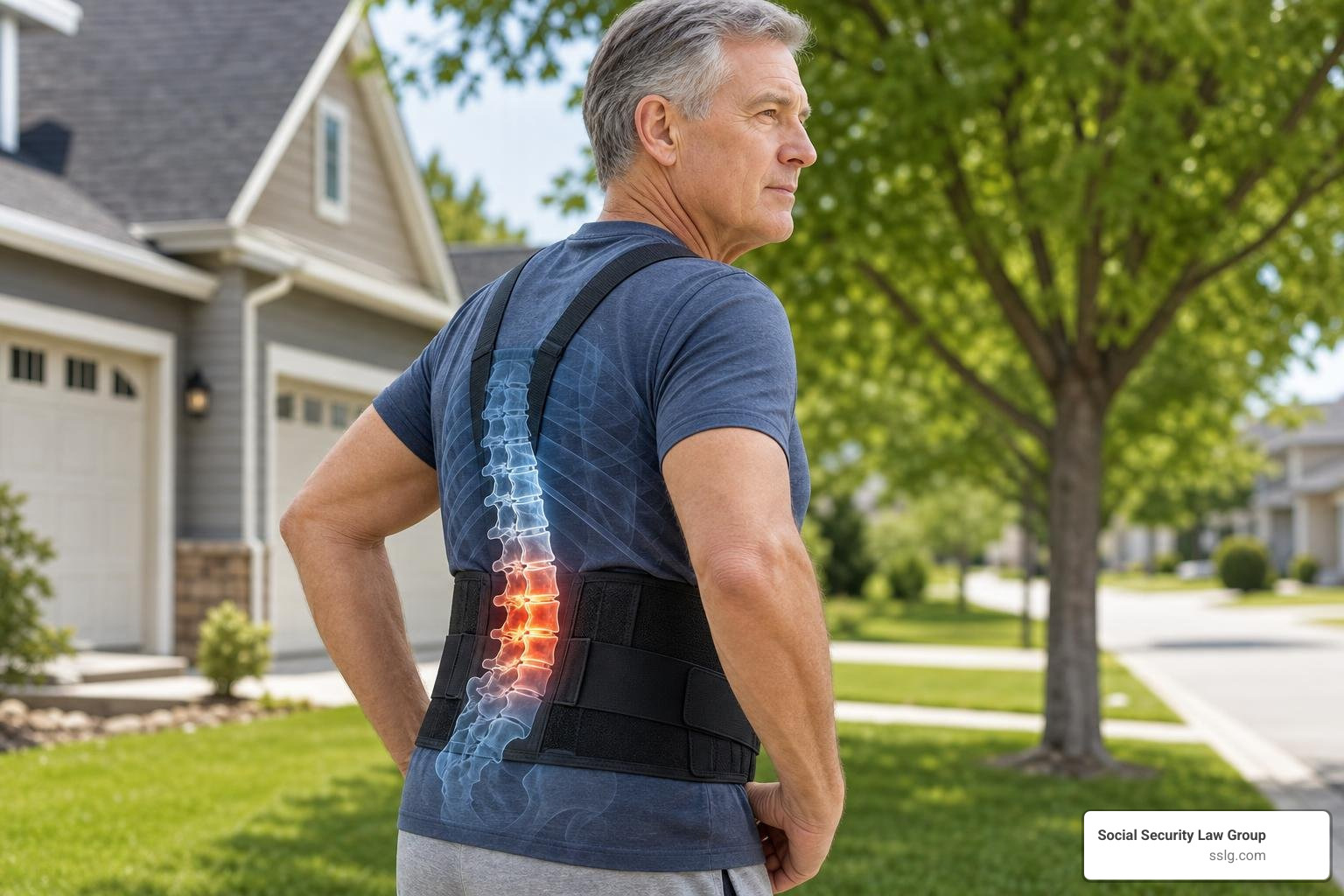
To understand whether your condition qualifies for benefits, we must first look at what Grade 1 retrolisthesis actually is. In simple terms, retrolisthesis is a spinal condition where a single vertebra moves backward and misaligns over the vertebra directly below it.
Medical professionals use a grading scale based on the percentage of backward displacement of the intervertebral foramen. According to clinical guidelines detailed in Retrolisthesis: An update, the grading scale is divided into four categories:
- Grade 1 (Mild): Up to 25% backward displacement.
- Grade 2 (Moderate): 25% to 50% backward displacement.
- Grade 3 (Severe): 50% to 75% backward displacement.
- Grade 4 (Extreme): 75% to 100% backward displacement (complete occlusion).
Even though Grade 1 is labeled as “mild,” a displacement of as little as 2 millimeters can significantly disrupt the biomechanics of your spine. This minor shift can narrow your spinal canal, pinch delicate nerve roots, and cause severe, localized, or radiating pain.
According to a clinical study on lumbar function, retrolisthesis at the L5-S1 level has an overall incidence of 23.2%. When combined with other spinal issues, the complications multiply. The incidence of retrolisthesis combined with degenerative disc disease is 16%, while its combination with posterior degenerative changes or vertebral endplate changes stands at 4.8% each. This means your “mild” slippage rarely exists in a vacuum. It is often part of a larger, highly painful degenerative process.
Understanding the Difference Between Retrolisthesis and Spondylolisthesis
While both terms sound similar and refer to vertebral displacement, they describe movement in opposite directions:
- Retrolisthesis is the backward (posterior) slippage of one vertebral body relative to the vertebra below it. It is less common than forward slippage but can be highly painful because of the way it compresses the nerves exiting the back of the spine.
- Spondylolisthesis is the forward (anterior) slippage of a vertebra.
- Laterolisthesis refers to a sideways slippage of the vertebra.
In both cases, the displacement disrupts the vertebral motion segment, putting immense stress on the surrounding spinal discs, facet joints, and nerve pathways.
Common Causes and Risk Factors of Spinal Slippage
Spinal slippage does not happen without a cause. For adults over the age of 50, the most common factors include:
- Osteoarthritis: Wear and tear on the facet joints that normally keep your vertebrae locked in place.
- Degenerative Disc Disease (DDD): As spinal discs lose water and shrink, the space between vertebrae decreases, allowing the bones to slip.
- Trauma: Sudden injuries from car accidents, falls, or heavy lifting can weaken the supportive ligaments.
- Ligament Laxity: A natural weakening of the tough tissues that hold your spine together.
- Obesity: Excess body weight puts continuous mechanical stress on the lower lumbar spine, accelerating slippage.
Is Mild Retrolisthesis a Disability Under SSA Rules?
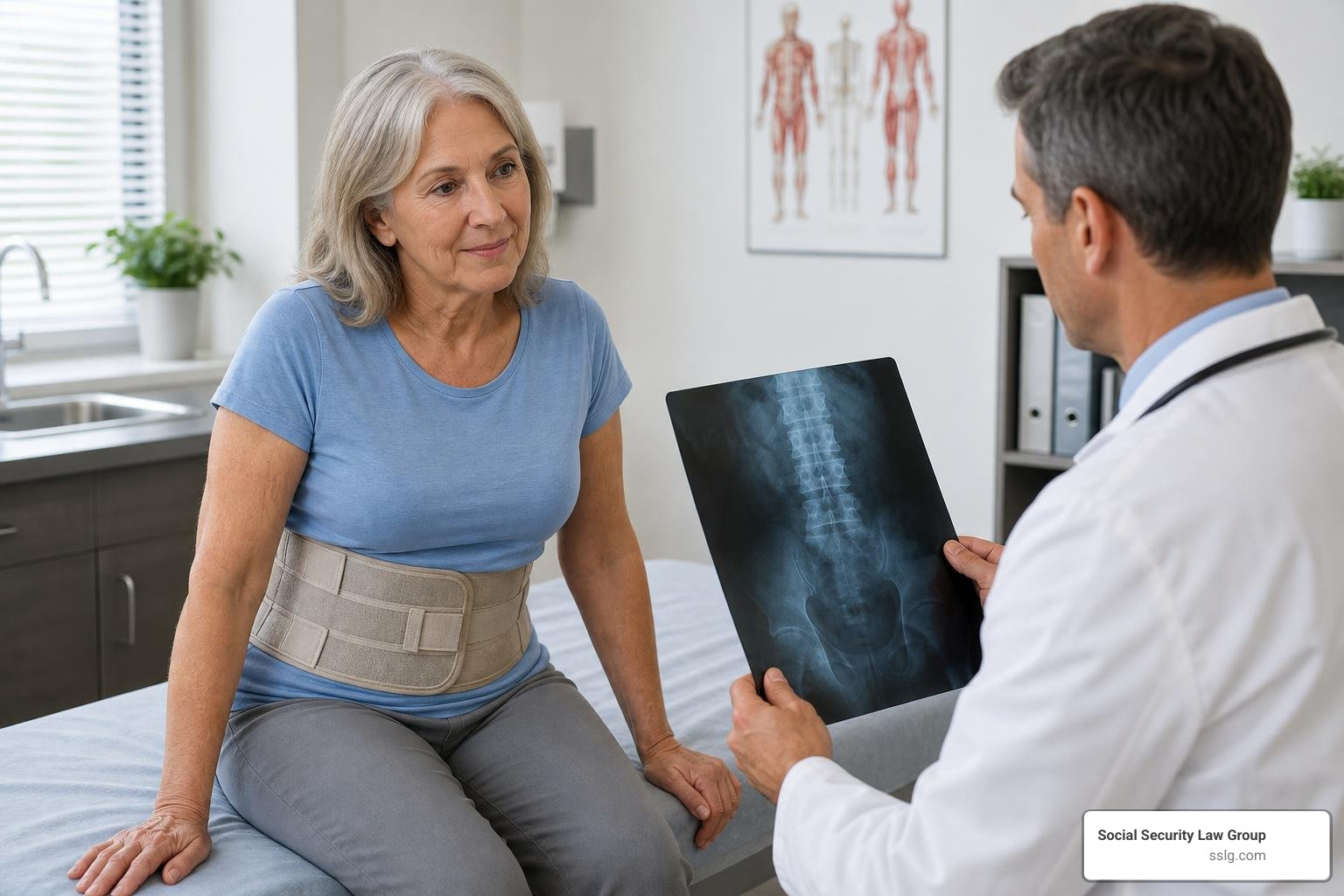
Yes, mild retrolisthesis can be considered a disability under Social Security Administration rules. However, the key to winning your claim lies in proving how the condition limits your ability to work.
When you apply for benefits, the SSA is not just looking for a diagnosis. They are looking to see if you meet their strict definition of disability. To qualify for disability benefits eligibility, your condition must:
- Prevent you from engaging in Substantial Gainful Activity (SGA), which means earning more than a specific monthly limit set by the SSA.
- Have lasted, or be expected to last, for a continuous period of at least 12 months, or result in death.
The SSA refers to their official listing of impairments, commonly known as the SSA Blue Book, to evaluate claims. While retrolisthesis does not have its own dedicated listing, it is evaluated under the broader category of musculoskeletal disorders.
How the SSA Evaluates Is Mild Retrolisthesis a Disability
The SSA focuses on your functional limitations rather than the medical label “mild.” They know that what a radiologist calls a “mild Grade 1 slip” can cause severe, debilitating pain for a patient.
During the evaluation of qualifying disabilities for Social Security, the SSA looks for objective medical evidence of:
- Compromise of a nerve root, which causes pain, numbness, or tingling.
- Muscle weakness or sensory deficits.
- Decreased range of motion in your spine.
- Difficulty standing or walking for extended periods.
If your medical records show that your Grade 1 slippage has caused these physical limitations, you are on the right track to qualifying.
Listing 1.15 and Medical Criteria for Spinal Disorders
The SSA evaluates severe back issues under Listing 1.15 (Disorders of the skeletal spine resulting in compromise of a nerve root). To meet this listing, your medical records must document:
- Nerve root compression characterized by pain, paresthesia (tingling), or muscle fatigue radiating to the affected limb.
- Physical exam findings showing a reduction in motion, muscle weakness, and sensory deficits (such as loss of reflexes).
- Imaging evidence (like an MRI or CT scan) showing nerve root compromise.
- A physical limitation so severe that you require a bilateral assistive device (like a walker, two canes, or a wheelchair) or have an inability to use one hand to initiate and complete work activities.
Because meeting Listing 1.15 is extremely difficult, most people seeking disability for back issues do not qualify under this medical listing alone. Instead, they qualify by showing their condition prevents them from working.
Qualifying for Benefits Without Meeting a Listing
If your Grade 1 retrolisthesis does not perfectly match the strict criteria of Listing 1.15, you can still win your claim through a Residual Functional Capacity (RFC) assessment.
An RFC is an evaluation of the maximum amount of work you can still perform despite your physical limitations. The SSA will look at your doctor’s restrictions, your treatment history, and your daily pain levels to determine if you can handle full-time employment. This assessment is a core part of the social security disability requirements.
If the SSA determines that your back pain prevents you from doing your past work and that you cannot adjust to lighter, sedentary work, they will grant you a vocational allowance. This is especially true for claimants over the age of 50, as the SSA’s “medical-vocational grid rules” make it easier to qualify as you get older.
How Grade 1 Retrolisthesis Affects Your Ability to Work
Even a mild spinal slip can cause severe symptoms that disrupt your work day:
- Radiating Pain (Sciatica): Backward slippage in the lower back often pinches the sciatic nerve, causing shooting pain, numbness, and weakness down your legs.
- Standing Limitations: Standing on hard surfaces for more than 15 to 30 minutes can cause intense muscle spasms in your lower back.
- Sitting Tolerance: Sitting for long periods compresses the spinal discs, worsening your pain. You may need to change positions or lie down frequently.
- Fine Motor Skills: If you have cervical (neck) retrolisthesis, pinched nerves can cause numbness in your hands, making it hard to type, write, or handle small objects. This is a common complication similar to what is seen when evaluating if spinal stenosis a disability.
Objective Medical Evidence Needed for an RFC
To build a strong RFC case, you must provide the SSA with clear, objective medical evidence. This includes:
- Standing Lateral X-rays: This is the primary tool used to measure the exact millimeter slippage of your vertebrae.
- MRI or CT Scans: These scans show whether your slipped vertebra is pressing against your spinal cord or nerve roots, which is common if you also have degenerative disc disease disability markers.
- Detailed Treatment Records: Documentation of physical therapy, epidural steroid injections, chiropractic care, and prescribed pain medications.
- Physician Statements: A written opinion from your treating orthopedic specialist or neurologist detailing your specific physical restrictions (e.g., how long you can sit, stand, and how much weight you can lift).
Financial Programs and Benefit Amounts for Spinal Slippage
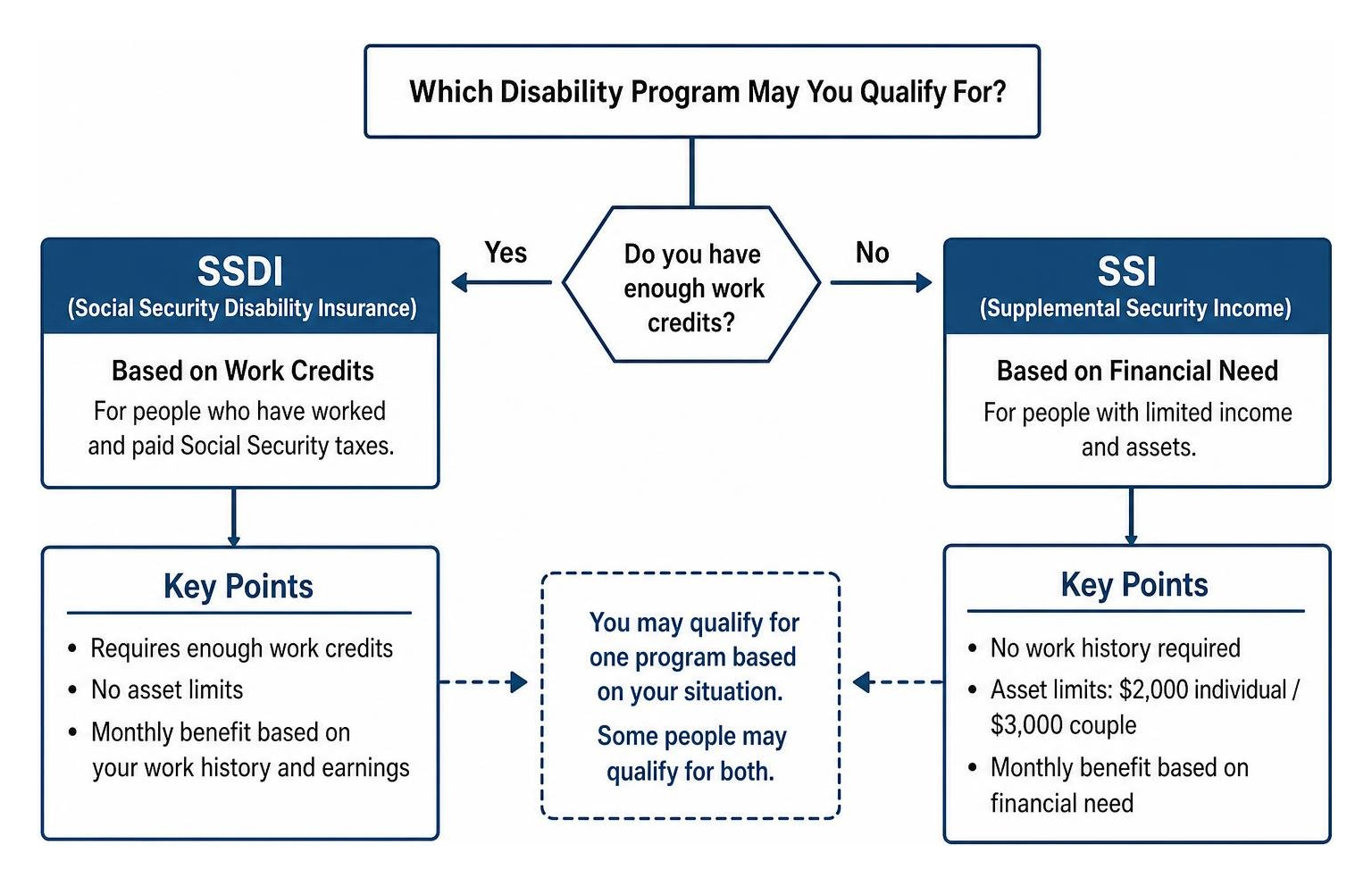
When applying for disability, you will need to choose the program that fits your work history and financial situation.
| Feature | SSDI (Social Security Disability Insurance) | SSI (Supplemental Security Income) |
|---|---|---|
| Eligibility Basis | Work history and paid Social Security taxes | Financial need and low income/assets |
| Average 2026 Payment | \~$1,630 per month | \~$737 per month (individual) |
| Maximum 2026 Payment | \~$4,152 per month | \~$994 per month (individual) |
| Asset Limits | None | $2,000 for individuals / $3,000 for couples |
SSDI vs. SSI: Key Differences for Is Mild Retrolisthesis a Disability Claims
The SSA manages two separate programs for disabled individuals:
- SSDI: This program is for individuals who have worked and paid into the Social Security system. To meet SSDI eligibility rules, you must have earned enough “work credits” based on your age and employment history.
- SSI: This program is designed for disabled individuals with limited income and assets (under $2,000 for an individual). You do not need a work history to qualify for SSI disability benefits.
To understand which program fits your situation, you can check the what medical conditions qualify for Social Security disability guidelines on the official SSA website.
VA Disability Ratings for Spinal Slippage
If you are a veteran, you may also qualify for VA disability benefits. The VA evaluates spinal slippage conditions like retrolisthesis under diagnostic code 5239 (Spondylolisthesis or Segmental Instability).
The VA rating is based on your range of motion and is calculated using the General Rating Formula for Diseases and Injuries of the Spine. According to the VA rating criteria:
- A 10% rating is given if your forward flexion of the thoracolumbar spine is between 60 and 85 degrees.
- A 100% rating is given for complete spine rigidity.
According to official VA compensation rates, a 10% rating pays a baseline of $175.51 per month, while a 100% rating for a single veteran pays $3,974.15 per month.
Frequently Asked Questions About Mild Retrolisthesis
Can Grade 1 retrolisthesis be cured without surgery?
Yes, the vast majority of Grade 1 retrolisthesis cases are managed effectively without surgery. Conservative treatments include:
- Physical Therapy: Focused exercises to strengthen your core and back muscles, specifically the transversus abdominis and quadratus lumborum, to help stabilize the misaligned vertebrae.
- Ergonomic Adjustments: Sitting with a trunk inclination of 120 degrees with a supported lumbar spine provides the lowest load to your spinal discs.
- Pain Management: Using moist heat to reduce muscle spasms, followed by over-the-counter anti-inflammatory medications.
How much does disability pay for spinal disorders in 2026?
Disability pay depends on the program you qualify for and your past earnings. For SSDI, the average monthly benefit is approximately $1,630, with a maximum possible payment of $4,152. For SSI, the federal benefit rate is capped at approximately $994 per month for individuals. VA disability compensation ranges from $175.51 to over $3,974.15 per month depending on your overall rating.
What should I do if my disability claim is denied?
Do not panic. Over 60% of initial disability applications are denied. If you receive a denial, you have 60 days to file an appeal, starting with a Request for Reconsideration. If that is denied, you can request a hearing before an Administrative Law Judge (ALJ). Having strong medical documentation and experienced legal representation significantly increases your chances of winning on appeal.
Conclusion and Next Steps
If your Grade 1 retrolisthesis is causing severe, chronic pain that stops you from working, you deserve to have your claim evaluated fairly. Do not let the word “mild” discourage you from seeking the financial support you need.
To give yourself the best chance of success, we recommend following these steps:
- Work closely with your orthopedic doctor to document your physical limitations.
- Keep a daily log of your pain levels, mobility issues, and side effects from medications.
- Review our guide on how to apply for social security disability to prepare your application.
- Contact a dedicated legal professional to guide you through the process.
At Social Security Law Group, we have been helping individuals secure their benefits since 1994. Whether you are in Boston, Dallas, Miami, St. Louis, Detroit, Phoenix, Atlanta, Houston, Charlotte, Seattle, or Chicago, our team is ready to assist you. We offer a no-win, no-fee structure, meaning you do not pay us unless we win your claim.
Contact us today to explore our SSI disability services and schedule your free, no-obligation consultation.
The information provided in this blog article is intended to be general in nature and should not be construed as legal advice. Social Security laws and regulations are subject to, and often change. Please consult the official Social Security Administration (SSA) website or contact SSLG for advice regarding your specific legal matters.