

Living with severe back pain changes everything about your daily life, often making even the simplest movements feel like an insurmountable challenge. If you suffer from chronic back issues, you might ask yourself, is spinal stenosis a disability that qualifies for federal assistance? How does spinal stenosis affect your ability to perform daily tasks? The short answer is yes, spinal stenosis is a disability under specific federal guidelines provided by the Social Security Administration. However, simply having a diagnosis is rarely enough to secure the financial support you need to maintain your quality of life.
Getting approved for disability benefits requires substantial proof of your physical limitations and how they prevent you from maintaining gainful employment. The government evaluates spinal stenosis carefully before granting any financial support, looking for specific clinical markers of nerve root compression. You must provide compelling medical evidence, including imaging and physical exam findings, to win your disability claim. Without a comprehensive medical file, many valid claims are unfortunately denied during the initial review phase.
Understanding how spinal stenosis affects the body helps explain why it limits work capacity so drastically for thousands of Americans. This medical condition causes severe narrowing of the spaces inside your backbone, which can be a result of aging or traumatic injury. Severe narrowing puts dangerous pressure on your spinal cord and nerves, leading to a condition known as neurogenic claudication. This pressure within the spinal canal can cause permanent damage if left untreated or if the condition progresses rapidly. The progressive narrowing of the spinal canal can lead to permanent nerve damage if not managed by a specialist.

When spinal stenosis occurs, the narrowing spaces restrict the nerves traveling through the spinal canal, leading to significant neurological deficits. This restriction often results in chronic pain, numbness, and severe muscle weakness in your limbs that does not improve with rest. The impact of spinal stenosis can make holding a full-time job virtually impossible, especially if your role requires standing or walking. Many patients find that they can only find relief by leaning forward, a posture often referred to as the “shopping cart sign.” Many patients find that stenosis affect their sleep patterns, leading to chronic fatigue that further diminishes their productivity.
Doctors categorize spinal stenosis into different types based on where the narrowing happens within the vertebral column. Lumbar spinal stenosis affects your lower back and causes intense pain radiating down your legs, often accompanied by a heavy feeling. Cervical spinal stenosis impacts your neck area, leading to severe coordination problems in your hands and potential issues with balance. Both types of spinal stenosis are recognized by the Social Security Administration as potentially disabling conditions if they meet certain severity markers.
Sometimes, spinal stenosis happens alongside other serious issues like a herniated disc, degenerative disc disease, or bone spurs. In extreme cases of spinal stenosis, patients might develop cauda equina syndrome, requiring emergency surgery to prevent permanent paralysis. These compounding factors significantly strengthen your case for social security disability benefits by demonstrating a multi-level impairment. When multiple spinal levels are involved, the cumulative effect on your mobility is often much greater than a single-level diagnosis.
The Medical Reality of Nerve Damage
The pressure from spinal stenosis directly damages the nerve root exiting your spinal column, leading to a condition called radiculopathy. This nerve compression creates shooting pain that severely limits your physical mobility and your ability to maintain a consistent posture. Advanced nerve compression makes basic tasks like standing or walking incredibly difficult to perform for more than a few minutes. Over time, this lack of mobility can lead to muscle atrophy, further complicating your ability to return to the workforce.
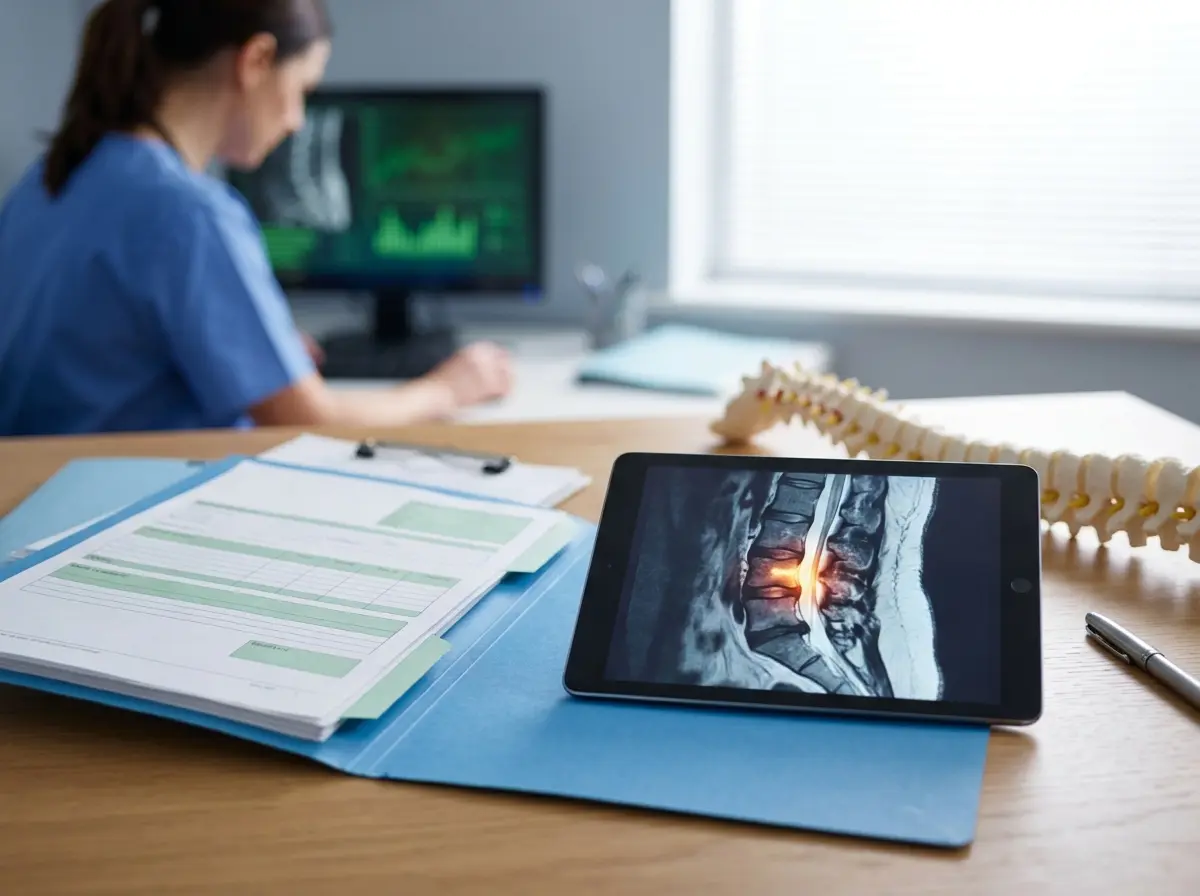
Your doctor will use imaging tests to confirm the exact location and the specific grade of your spinal stenosis. MRI scans provide detailed pictures of your spinal cord and the surrounding nerve structures, showing the degree of impingement. Accurate medical records documenting your spinal stenosis remain absolutely critical for your application, as they provide the objective proof required by law. Clinical findings such as a positive straight-leg raise test or diminished deep tendon reflexes also serve as vital evidence.
Treatment for spinal stenosis usually begins with conservative approaches like targeted physical therapy and anti-inflammatory medications. If physical therapy fails to relieve your symptoms, doctors may recommend epidural steroid injections or even complex surgical intervention. Documenting these failed treatments helps prove that your spinal stenosis resists standard medical care and is a long-term impairment. The social security administration needs to see that you have followed prescribed treatment without achieving significant functional improvement.
- Spinal stenosis qualifies as a disability if it severely restricts your physical mobility.
- Medical imaging and consistent treatment records form the foundation of a successful claim.
- Both lumbar and cervical variations of this condition can lead to benefit approval.
How Social Security Evaluates Spinal Stenosis for Disability Benefits
When you apply for disability benefits, evaluators look for specific criteria in their medical manual, commonly known as the Blue Book. Evaluators check if your spinal stenosis meets the strict requirements under Listing 1.16. To have your spinal stenosis meet the strict criteria of Listing 1.16, you must demonstrate specific neurological deficits. If your spinal stenosis symptoms meet these specific rules, you might receive an automatic approval without further vocational review.
Meeting the listing means your condition causes severely compromised nerve function that is documented by appropriate medical imaging. You must provide extensive medical evidence showing that you require an assistive device that limits the use of your hands. Does your stenosis meet the requirement for a documented need for a bilateral assistive device? A walker, bilateral canes, or a wheelchair proves that your spinal stenosis causes extreme difficulty walking or maintaining balance. The agency also looks for evidence of “pseudoclaudication,” which is pain in the legs that occurs when walking or standing.
If your spinal stenosis does not meet the listing, you still have options to secure necessary disability benefits. The social security administration will assess your residual functional capacity (RFC) to determine your actual work limits. This functional capacity assessment looks at how the narrowing affects your ability to sit, stand, lift, and carry items during a standard workday. Even if you don’t meet a listing, your combined symptoms may prevent you from doing any job in the national economy.
The Role of Your Residual Functional Assessment
Your residual functional evaluation plays a massive role in the final claim decision, especially for applicants over the age of 50. The agency determines what type of work you can perform despite your spinal stenosis by looking at your past relevant work. If they decide your impairment prevents all work, including sedentary tasks, they will approve your claim for disability benefits. This assessment takes into account your age, education, and transferable skills to see if vocational adjustment is possible under the Medical-Vocational Guidelines.
Thorough documentation of how spinal stenosis symptoms affect your life remains absolutely necessary for a favorable RFC. Evaluators need to see exactly how spinal stenosis affects your ability to lift objects or reach overhead. Every detail about your daily limitations, such as needing to lie down several times a day, helps build a more convincing case for approval. You should keep a daily pain journal to document the frequency and intensity of your symptoms for your medical providers.
You must consistently update the government about your ongoing medical treatments and any new diagnostic findings. Regular doctor visits prove that your condition remains a severe and limiting condition that requires professional management. The social security administration requires recent medical data, usually from the last six months, to justify awarding any financial support. Gaps in medical treatment are often cited as a primary reason for claim denials, as they suggest the condition is manageable.
Always request a copy of your medical record before submitting your initial application. Reviewing these documents helps verify that your doctor explicitly mentioned your spinal stenosis diagnosis and the specific nerve roots affected.
Gathering the Right Medical Evidence for Spinal Stenosis SSDI Benefits
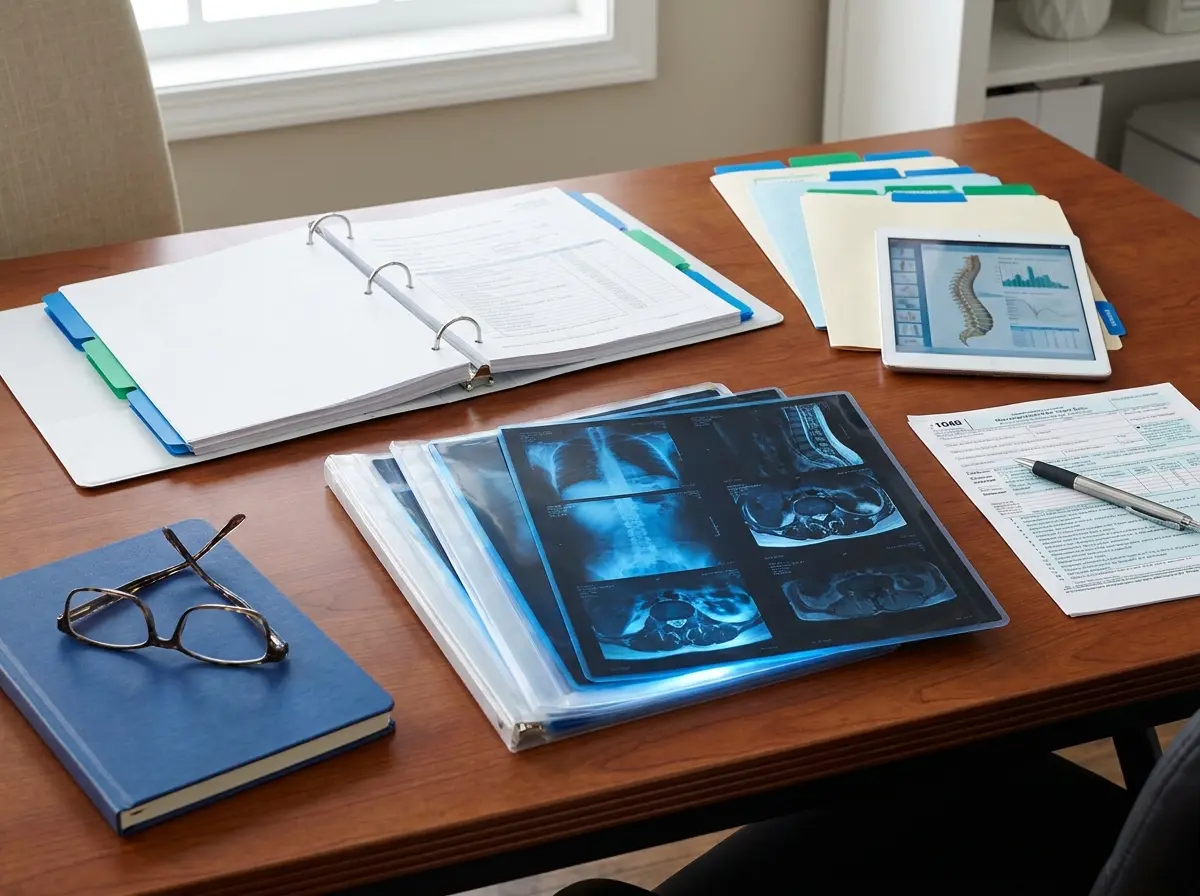
Strong documentation forms the absolute foundation of any successful disability claim for SSDI benefits. The application process for SSD benefits is notoriously rigorous, requiring patience and meticulous attention to detail. A single doctor’s note stating you have nerve issues will not convince the evaluators of your total disability. You need objective imaging tests, such as CT scans or MRIs, showing the exact severity of your spinal stenosis and its impact on the nerve roots. These tests provide the “hard evidence” that administrative law judges rely on when making their final decisions.
Consistent treatment history shows the government that you take your spinal stenosis seriously and are seeking relief. Your files should include records of specialist visits, such as those with neurologists or orthopedic surgeons, related to your lumbar spinal issues. Documenting every treatment for your lumbar spinal stenosis, including physical therapy notes and injection logs, builds a much stronger application. The more detailed the records, the easier it is for the social security administration to see the progression of your condition.
Every document submitted must clearly detail the physical limitations caused by your condition in a way that relates to work. Your doctor should specifically note how your cervical spinal issues limit your arm movement or your ability to perform fine motor tasks. Detailed physician statements regarding your cervical spinal stenosis carry far more weight than vague summaries that only list a diagnosis. Ask your doctor to complete a Medical Source Statement that specifically addresses your functional limitations in a work setting.
One of the most significant challenges in proving a disability claim involves the subjective nature of chronic pain. While you may feel excruciating discomfort, the Social Security Administration prioritizes objective clinical findings over personal reports of pain. This is why having a clear MRI showing the narrowing of the spinal canal is so vital to your success. Without these objective markers, evaluators may struggle to understand how your spinal stenosis affect your daily functioning. Consistent medical records that bridge the gap between your pain and the clinical evidence are the key to a successful outcome.
Steps to File for Social Security Disability Benefits
Collect Your Documentation
Gather all records related to your lumbar spinal stenosis and work history. Proper documentation of your lumbar spinal problems helps speed up the review process and ensures no evidence is overlooked.
Complete the Application
Submit your paperwork for disability benefits online or in person at a local office. Make sure to list every symptom caused by your lumbar spinal stenosis, including pain, numbness, and fatigue.
Prepare for the Appeals Process
Many initial applications for social security disability receive a quick denial. If denied, you must file an appeal for your SSDI benefits within sixty days to keep your claim active and preserve your backpay.
Why Working With a Social Security Disability Law Firm Makes Sense
Many applicants try to handle their spinal stenosis application entirely on their own, thinking the medical records will speak for themselves. Unfortunately, the majority of initial claims receive a denial due to missing information or technical errors in the paperwork. Hiring an experienced disability attorney significantly improves your chances of winning an approval by ensuring your file is complete. An attorney can also help you prepare for the hearing stage, where you will testify before a judge.
A specialized law group understands exactly what administrative law judges want to see in a spinal stenosis case. Professionals working in disability law know how to present your spinal stenosis compellingly by highlighting the most relevant medical findings. They gather the right records, obtain supportive statements from your doctors, and handle all communication regarding your security disability case. This professional representation is often the difference between a denial and a life-changing approval.
During the hearing phase, a vocational expert often provides testimony regarding your ability to transition to other types of work. They analyze your past work history and determine if your current physical limitations allow for any sedentary employment. An experienced SSD attorney knows how to cross-examine these experts to demonstrate that your condition is truly disabling. If your spinal stenosis meet the criteria for a listing, this testimony may not even be necessary for an approval.
Whether you live in New York or Las Vegas, the federal rules for SSDI benefits remain identical across the country. Partnering with a dedicated law firm takes the stress off your shoulders completely, allowing you to focus on your health and recovery. An expert attorney will fight for the security disability benefits you rightfully deserve, navigating the complex bureaucracy on your behalf. They understand the “Grid Rules” and how your age can actually work in your favor during the evaluation.
Firms specializing in disability law typically work on a contingency fee basis, making legal help accessible to everyone. This means the law firm only gets paid if you win your spinal stenosis case and receive backpay from the government. You have nothing to lose by consulting a professional about your social security options and the strength of your current medical evidence. Most firms offer a free initial consultation to review the specifics of your diagnosis and work history.
Managing severe spinal stenosis drains your physical and emotional energy every single day, leaving little room for legal battles. Let a professional handle the heavy lifting of your social security disability claim while you manage your medical treatments. Their expertise in disability law maximizes your chances of securing long-term financial stability through monthly benefit payments. They can also help you understand how your benefits might interact with other programs like Medicare or workers’ compensation.
Securing disability benefits provides more than just financial relief; it also grants access to essential healthcare through Medicare. Once you are approved for SSDI, there is a two-year waiting period before your Medicare coverage officially begins. During this time, it is crucial to continue your medical treatments to show that your condition remains severe. The Social Security Administration will periodically conduct reviews to ensure that your spinal stenosis still prevents you from working.
Do not wait until your medical condition worsens or your savings are depleted before seeking legal guidance. The sooner a law firm evaluates your case, the better your outcome will be throughout the multi-stage application process. Early intervention by experts in disability law prevents costly mistakes during the application process and ensures your spinal stenosis is documented correctly from day one. Taking proactive steps today can significantly shorten the time it takes to receive your first benefit check.
The Social Security Administration has strict deadlines for appeals. If you receive a denial letter, you generally only have 60 days to request a reconsideration or a hearing before an administrative law judge.

Find a Top Notch Social Security Attorney in Your State
The information provided in this blog article is intended to be general in nature and should not be construed as legal advice. Social Security laws and regulations are subject to, and often change. Please consult the official Social Security Administration (SSA) website or contact SSLG for advice regarding your specific legal matters.